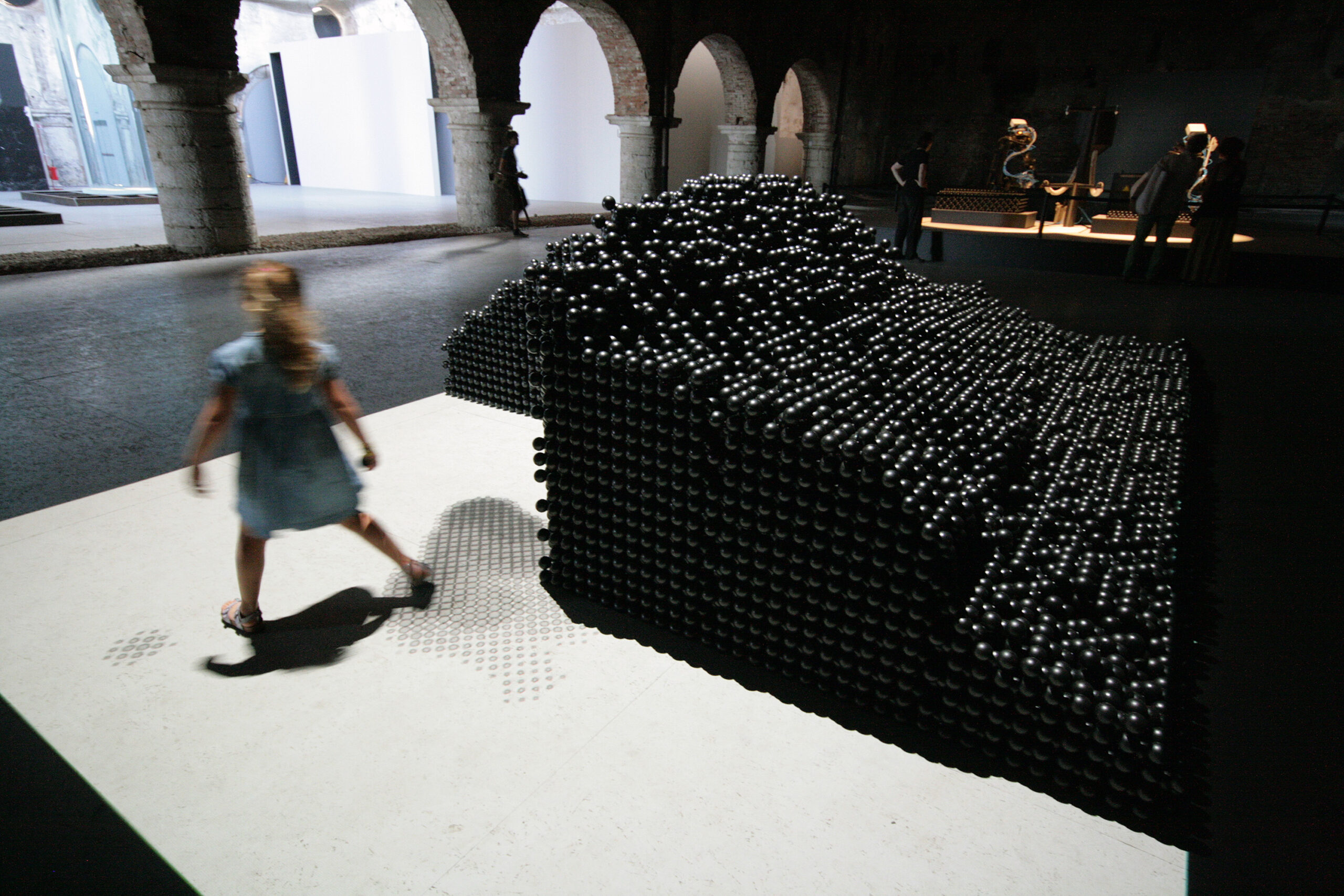
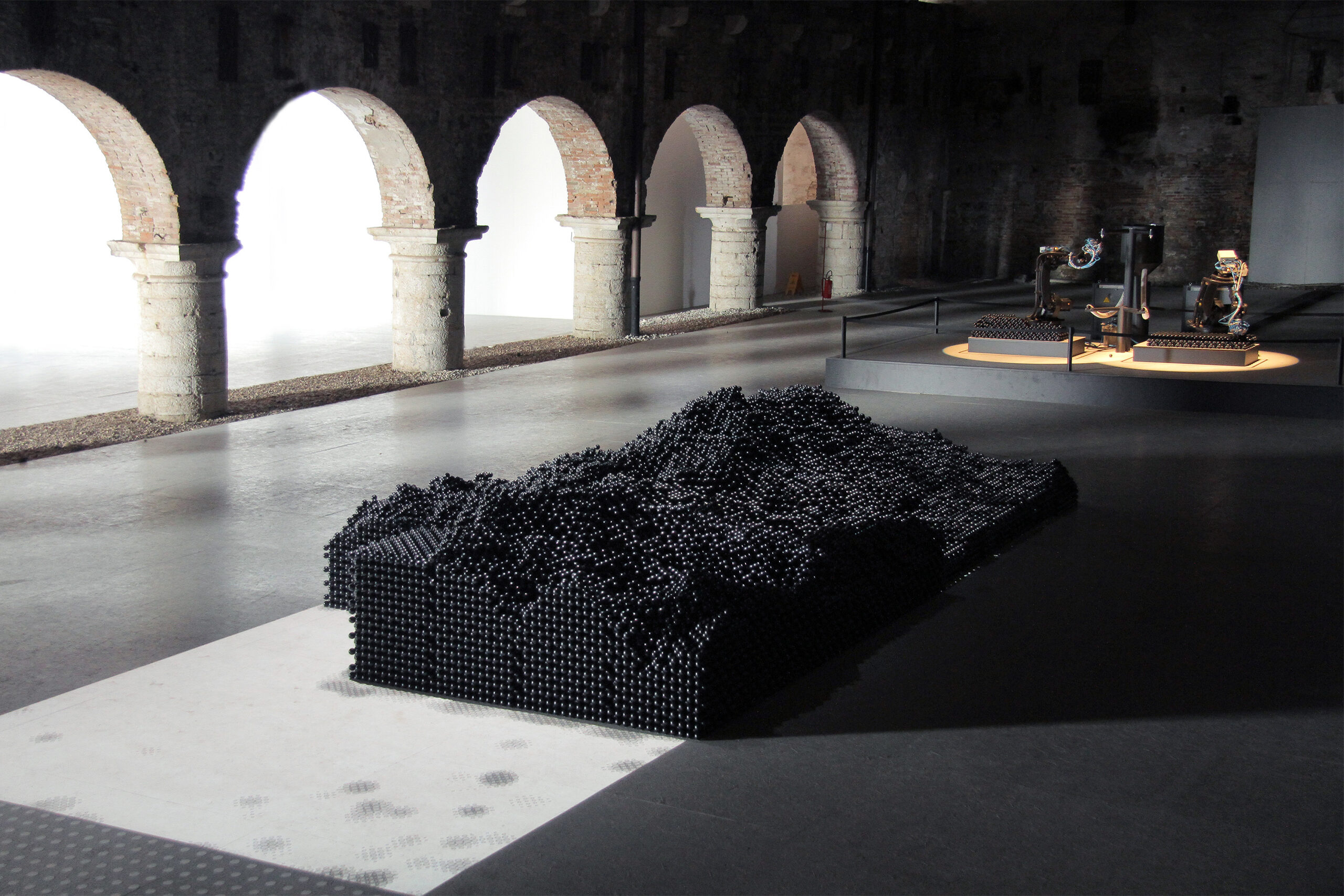
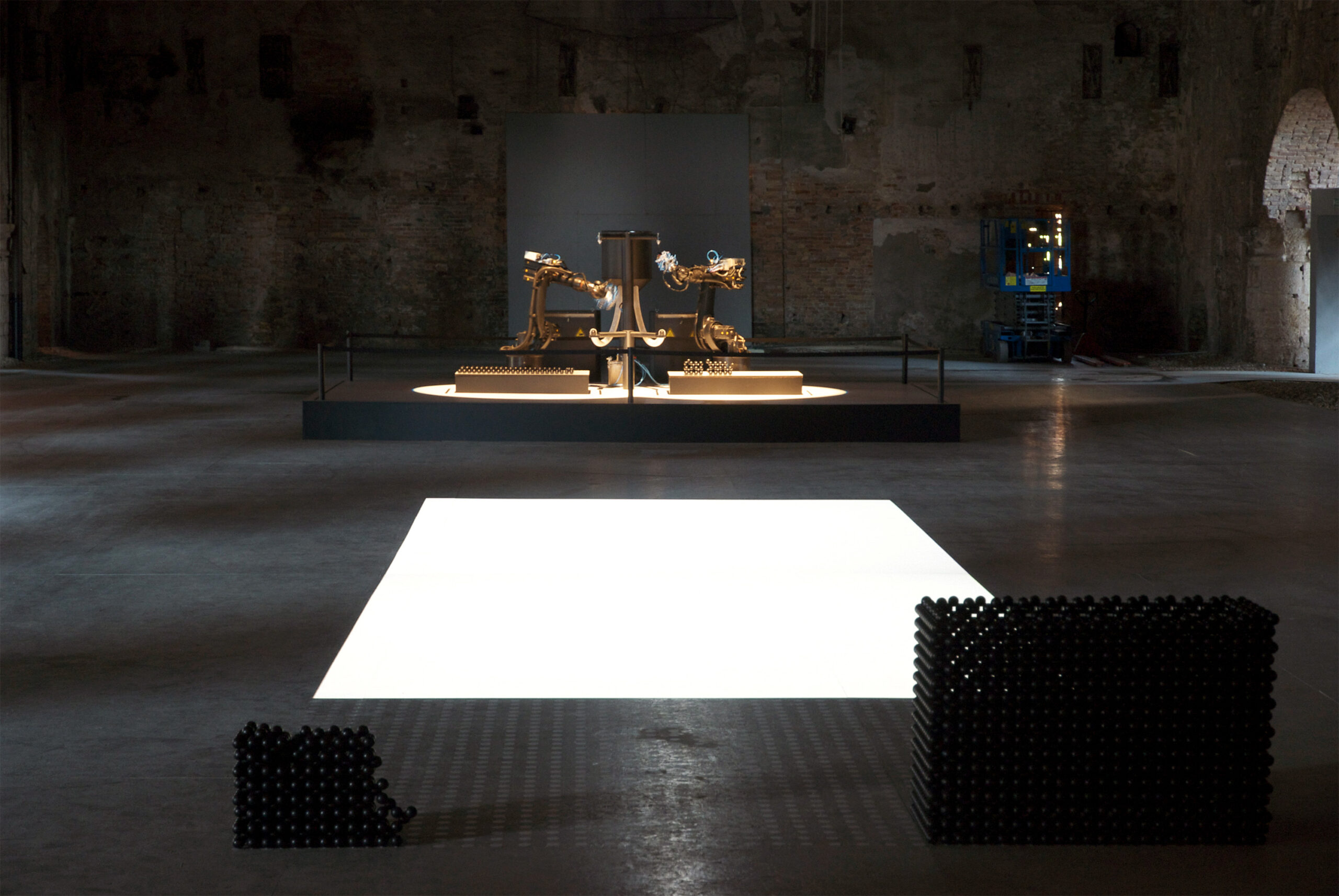
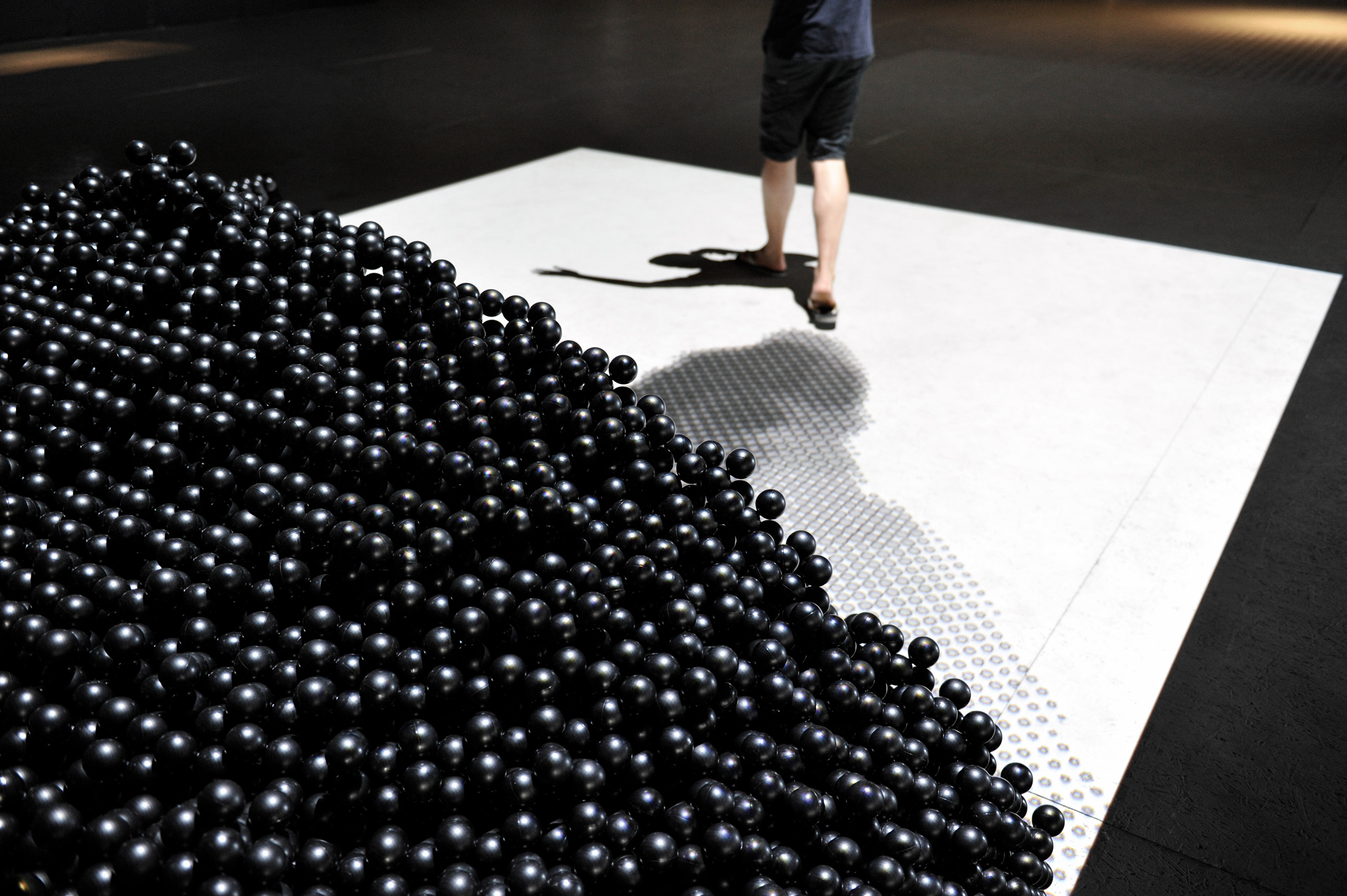
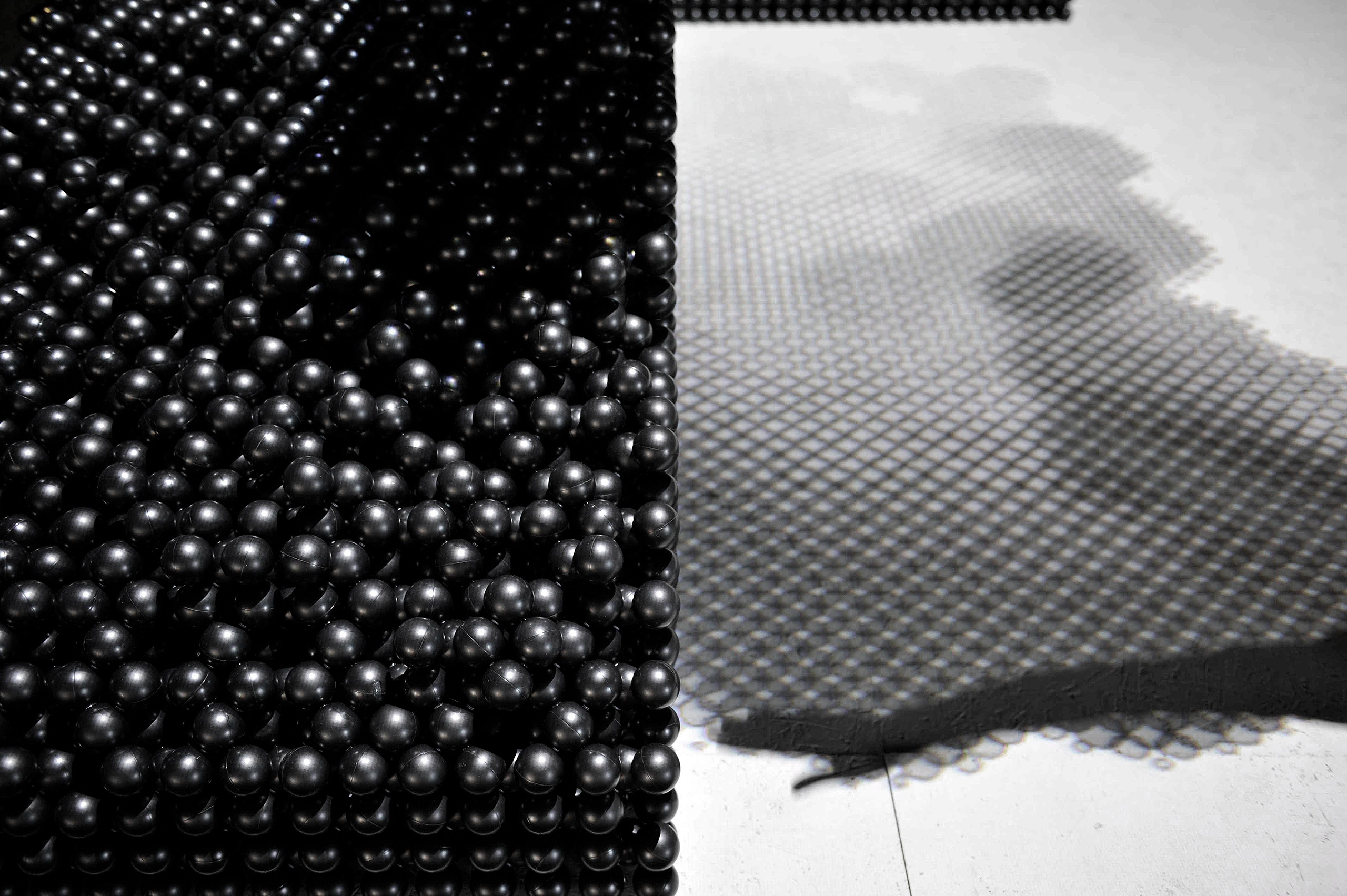
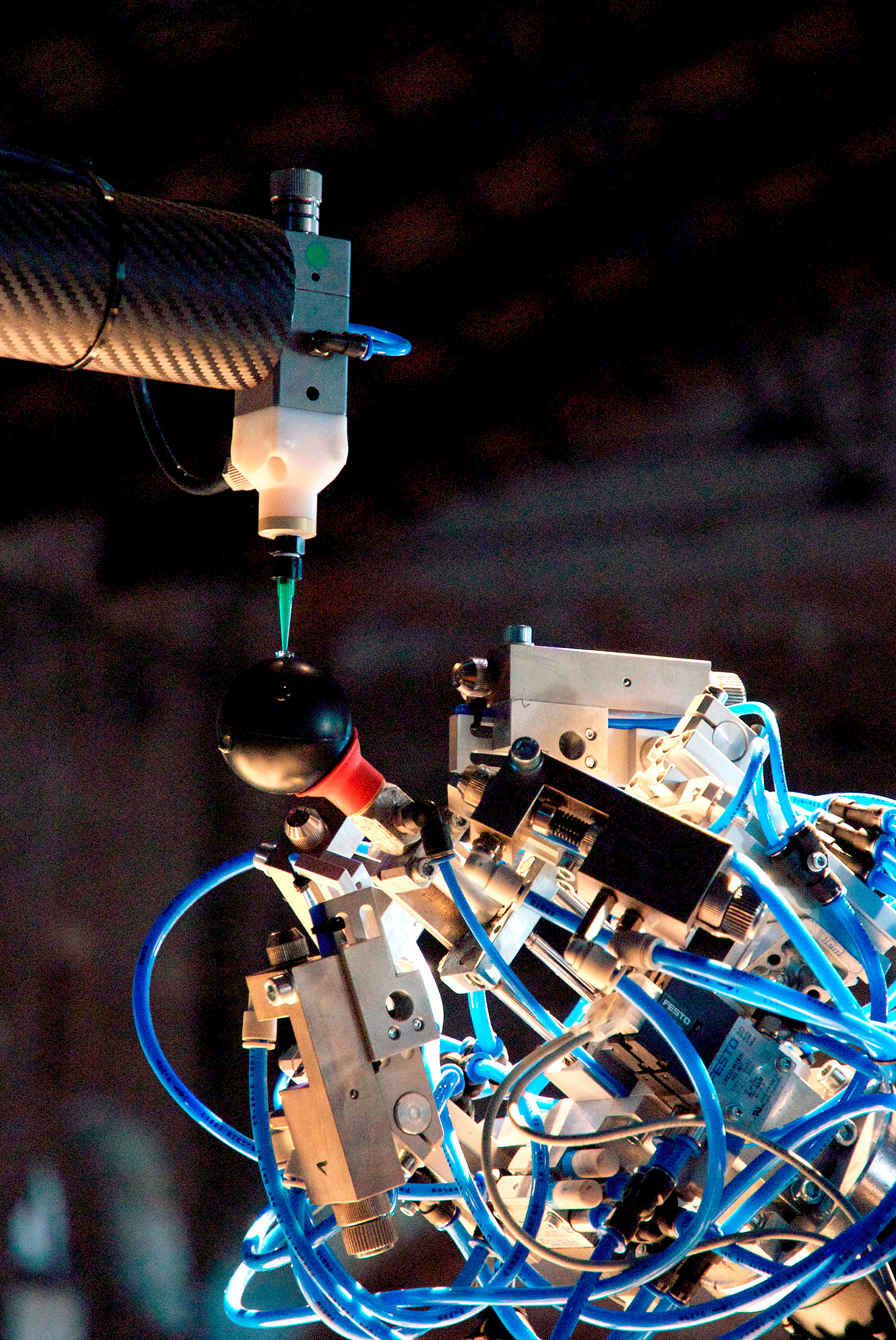
Outside Itself is a site-specific installation created by the artist for the 54th Venice Biennale in 2011, following on from his earlier work, Geometric Death Frequency 141 (2010). This project continues his exploration of the intersection between digital technology and physical reality, utilizing advanced technologies that were still relatively novel in the art world at the time.
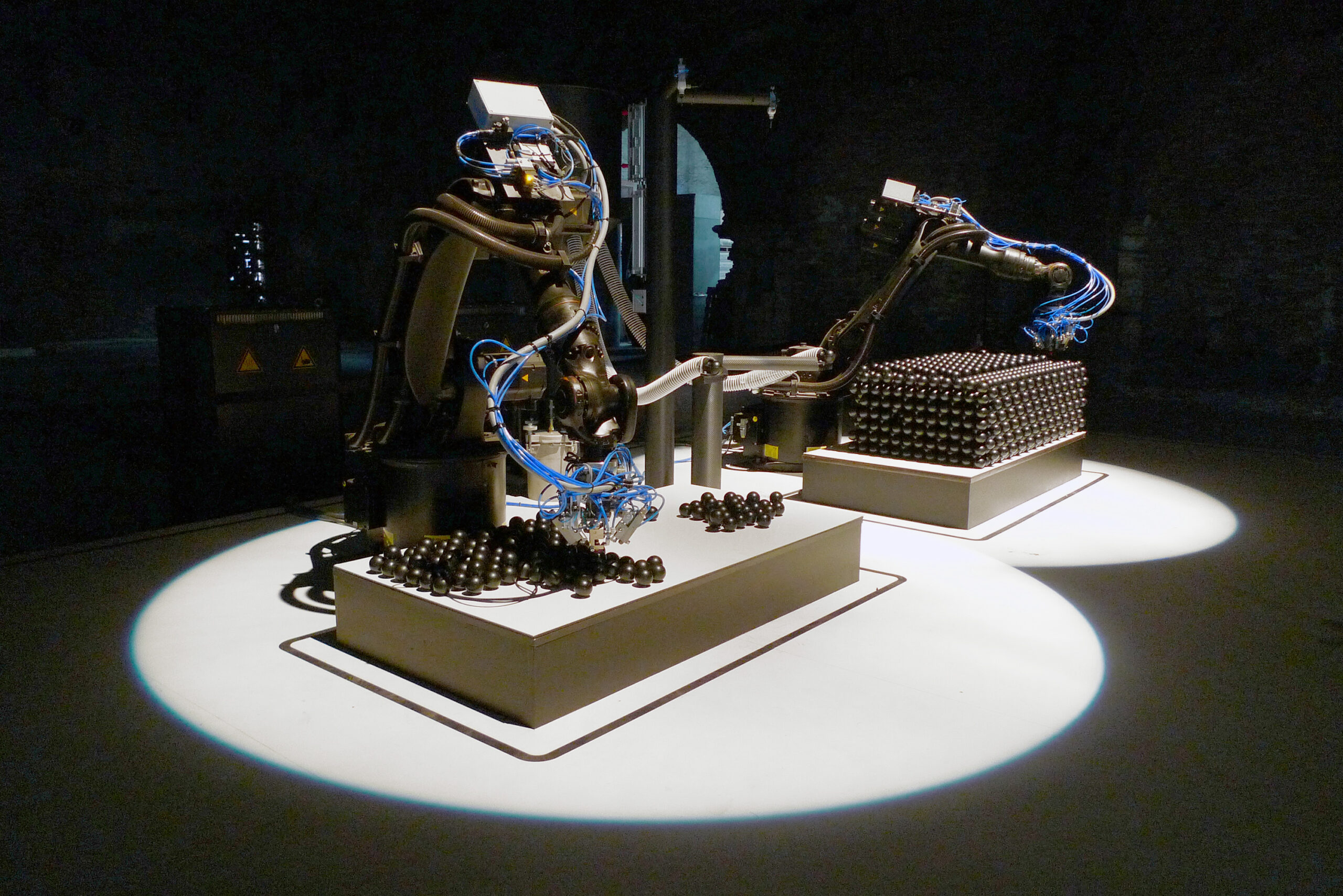
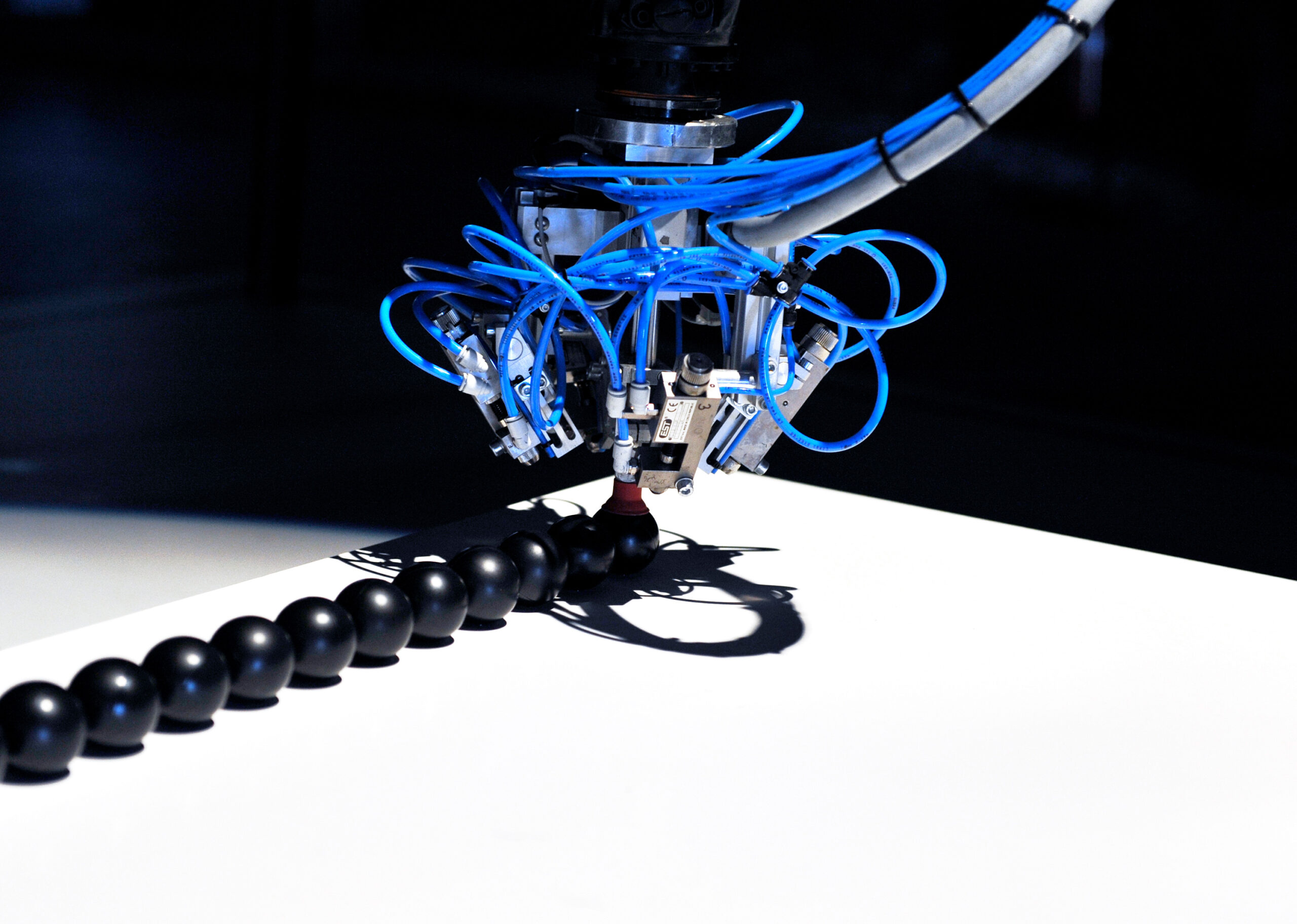
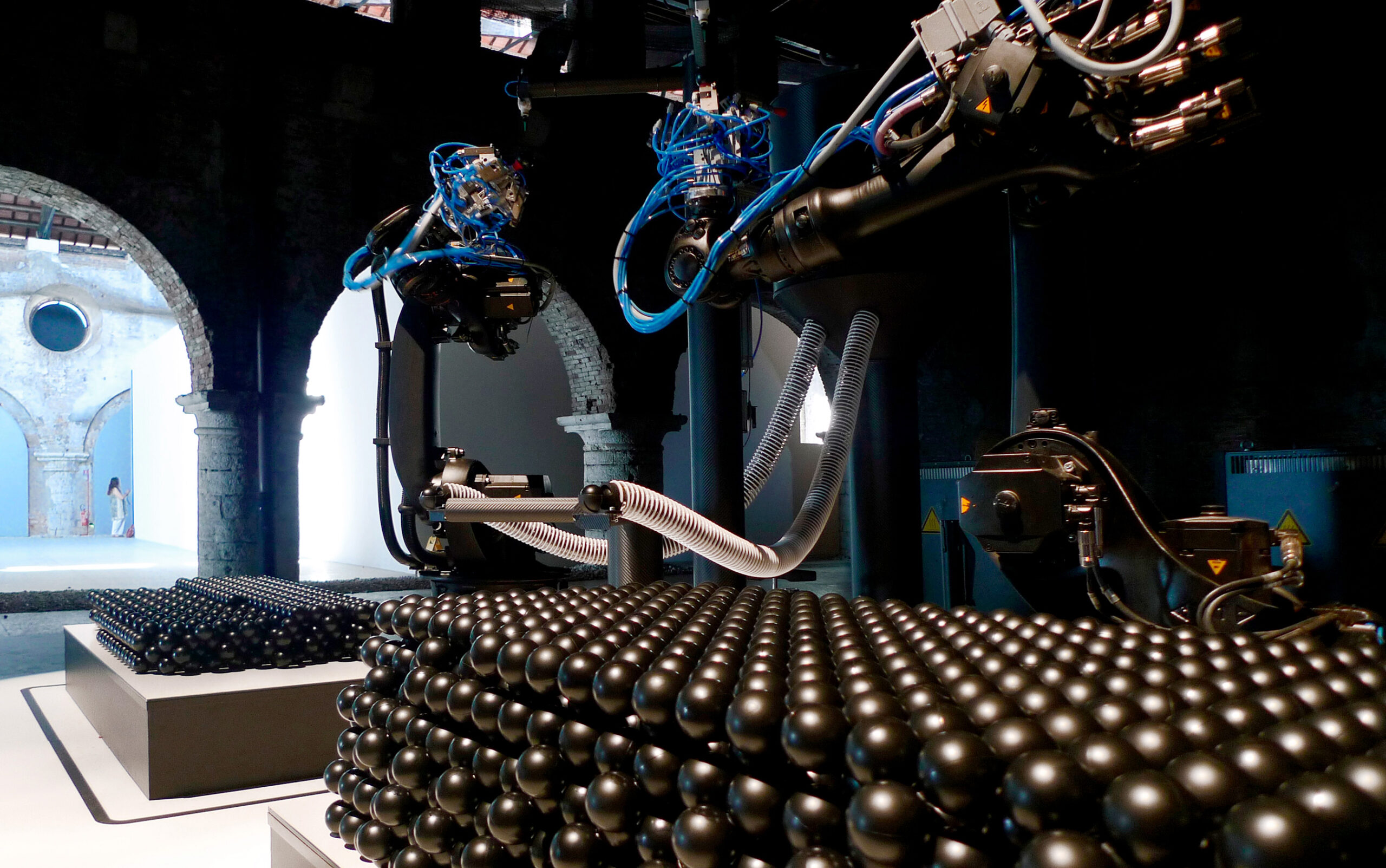
The installation is composed of thousands of black spheres, each representing a photon, which are produced and arranged by two precisely-calibrated robots. The process is driven by a mathematical program that reacts to data collected from the surrounding environment. Optical sensors monitor changes in ambient light, influenced by the movements, presence, and even the clothing of viewers. This data stream directs the robots to create and arrange the spheres into a constantly morphing, self-replicating structure that evolves in real-time, reflecting the interactivity of the viewers and the environmental conditions.
This installation, entirely untouched by human hands during its creation, is a profound commentary on the role of technology as an extension of human perception and experience. By using industrial robots in a manner that mirrors natural processes, the project blurs the lines between the artificial and the organic, challenging the traditional boundaries of artistic creation.
The work also draws upon the concept of the “mass ornament,” a term coined by the German cultural critic Siegfried Kracauer, which refers to the collective movements and patterns that emerge in society, often unnoticed in daily life. In Outside Itself, these patterns are translated into a dynamic, evolving sculpture, reflecting the social interactions and behaviors of the visitors, while also questioning the impact of technology on these patterns.
Credits
Filip Dubský, Alanna Heiss, Lukáš Kurilla